
Primavera (M) – 110 minutes
- Alex First
- 23 minutes ago
- 2 min read
Featuring the music of Antonio Vivaldi, Primavera is a deeply moving story set in Venice in the 18th century.
It concerns the passion of a gifted 20-year-old orphan and her acclaimed teacher.

Cecilia (Tecla Insolia) was abandoned by her mother in the Ospedale della Pietà orphanage and she grew up there, adhering to its strict protocols.
It is a place where gifted young women are musically trained to perform for the elite of Venetian society.
Their talents though are hidden behind ornate grills and bound by the rigid expectations of the era.
Cecilia is a violinist, who still holds out hope that her mother, to whom she secretly writes letters without knowing who she is, will one day return to collect her.
Her love of the violin and of music only becomes fully formed with the arrival of the sickly maestro and priest Antonia Vivaldi (Michele Riondino).

The charismatic and ambitious composer’s musical mastery – his spectacular oratorios – are second to none.
He has been engaged to front the Ospedale della Pietà orchestra, after it is being challenged by other orphanage orchestras in Venice.
Shy around his female charges, he takes a particular shine to Cecilia and she to him as she develops her acumen on the stringed instrument.
She longs to continue her musical journey, but the problem is that it will inevitably be severed when she marries a heroic soldier to whom she has been promised.
So it is that she takes drastic action that will change her fate.

Inspired by the novel Stabat Mater by Tiziano Scarpa, and written by Ludovica Rampoldi, the film explores the transformative power of music.
It is directed by acclaimed opera and theatre director Damiano Michieletto, marking his feature film debut.
Primavera is a rich and atmospheric period piece, highlighted by a series of noteworthy performances.
None is better than Tecla Insolia, who inhabits the soul of Cecilia, who yearns for more than what her young life has brought her.
It is in Insolia’s facial expressions and her body movements – how she carries herself. Cecelia is confined physically and mentally, and longs to break free.

Michele Riondino is a driving force as an ailing but equally passionate musical genius, forever in search of perfection.
Concert performances are money making affairs and that is where the governor wields the whip.
Andrea Pennacchi wears displeasure and delight as a badge of honour in that role.
Subservient to him is the no nonsense prioress (a nun who performs as head of a religious house), a role performed with fierce intent by Fabrizia Sacchi.
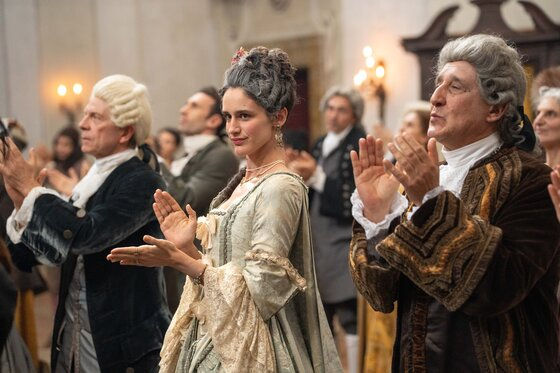
Primavera is also distinguished by sumptuous costuming and evocative make-up, wigs and hair styles.
It is hard to accept that Vivaldi (4 March 1678 – 28 July 1741), the impresario of Baroque music, died destitute.
Further, that his supreme talent was only rediscovered when his sheet music was found 200 years after his passing.
He composed his most famous work, The Four Seasons, during the years in which this story is set.
Primavera is a film of rare beauty and quality, distinguished by harshness and injustice.

Tecla Insolia is a talent to be watched closely in years to come, while Damiano Michieletto couldn’t have made a more auspicious feature debut.
Rated M, the movie scores an 8½ out of 10.


Comments